Dedicated RO Membrane Clean-In-Place (CIP) Skids & Immersion Heaters
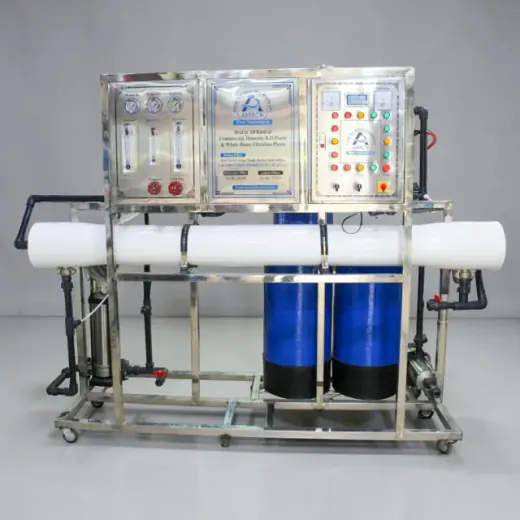
Dedicated mobile/fixed Clean-In-Place (CIP) tanks, low-pressure pumps, 5 µm guards & heaters restoring 4040/8040 RO flux.
Circulates heated chemical cleaning solution (low-pH citric/HCl acid or high-pH caustic/surfactant) at high cross-flow velocity and low pressure (<40–55 PSI) through fouled commercial RO vessels—flushing mineral scale, iron, and organic bio-slime safely without building permeate pressure that drives dirt deeper.
Common Size / Rating Options
220V 1-Phase
Application Scale & Replacement Verification
Scale: Industrial ROBrand: Engineering Family
Compare housing dimensions, port diameter, and membrane GPD capacity before ordering spares or requesting local dealer quotes. Verify System Fit in Water Planner →
Before You Install: Heat the CIP chemical batch strictly between 30°C and 40°C (warm caustic cleans 3× better than cold!), keep pressure below 40–50 PSI so almost ZERO permeate forms during cleaning, and run 30–60 min recirculation + 1 hour soak per vessel stage independently.
Key Technical Specs
| Engineering Category | Industrial RO · CIP Membrane Cleaning Skids |
|---|---|
| Field Variants Tracked | 16 dimensional & pressure configurations |
| Industry Standards | CE · SS316L Chemical-Resistant Pump |
| Tank Vol | 50 Liter Portable Cart (1-2x 4040), 200 Liter Commercial Skid (4040/8040), 500 Liter Industrial Skid (Multi-8040), 1000 Liter Large Plant CIP |
| Heater | Unheated Ambient, With SS316/Titanium Thermostat Heater (3kW-12kW) |
| Voltage | 220V 1-Phase, 380-415V 3-Phase |
Right Fit When
- Commercial/industrial RO plants (2 to 40+ vessels) restoring normalized flux when Delta-P rises 15%.
- Stainless/HDPE chemical mixing tanks with 5 µm guard filter, circulation pump, and immersion heater.
- Field aliases & trade names: Membrane CIP Skid, RO Flushing Cart, Acid/Alkaline Cleaning Skid, Chemical Mixing Tank.
- Engineered to CE, SS316L Chemical-Resistant Pump criteria where applicable.
When To Skip or Double-Check
- NEVER run CIP chemicals straight into RO vessels at high 150 PSI operating pressure or without a 5 µm CIP cartridge guard—high pressure forces loose flakes straight into membrane pores, and skipping the guard recirculates loosened scale endlessly!
Signs This Part Is Failing
- Poor chemical cleaning efficiency when solution stays cold (<25°C
- Ideal is 35–40°C)
- When 5µm CIP guard filter is missing and recirculates loosened scale
Diagnostic Checklists If Something Goes Wrong
Step 1 · Troubleshoot poor CIP recovery (Cold chemical or wrong pH)
Did membrane Delta-P barely budge after running a 2-hour CIP wash?
Verify tank thermometer reached 35–40°C (within OEM membrane temp limits!) and check pH drift during circulation.
Common Questions
What flow rate and pressure does a CIP pump need for 8040 vs 4040 membranes?
Target ~35–45 GPM per 8040 vessel (~8–10 GPM per 4040 vessel) at low <45–60 PSI head so cross-flow scours spacers without pressing water through membranes.
How do I check CIP heater safety?
Always fit a low-level float cutoff on the CIP tank wired to the immersion heater so an empty mixing tank never boils dry and melts HDPE walls!