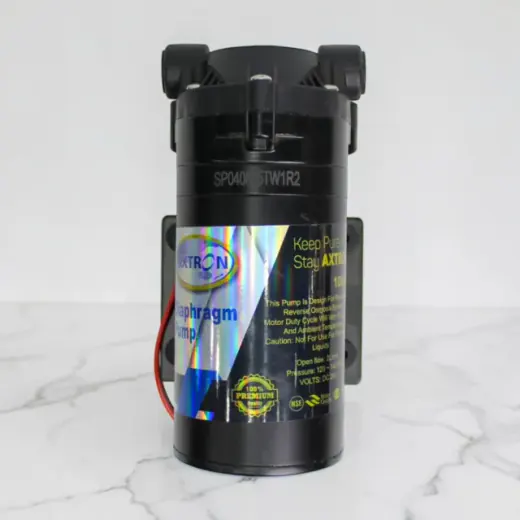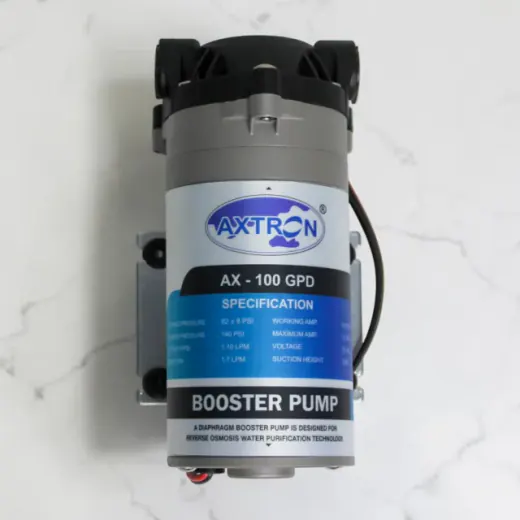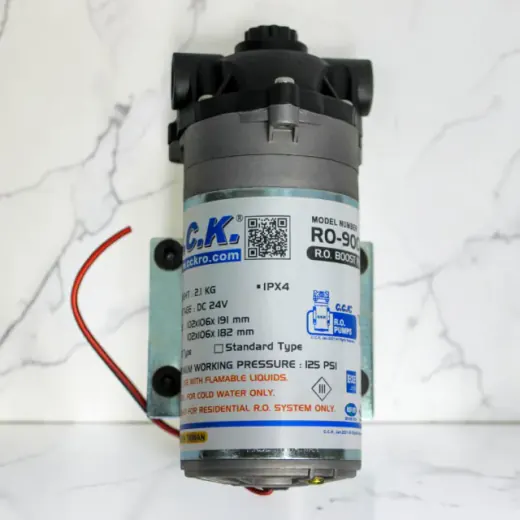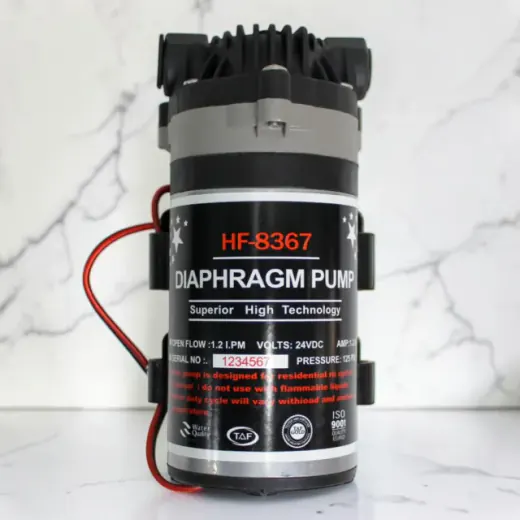
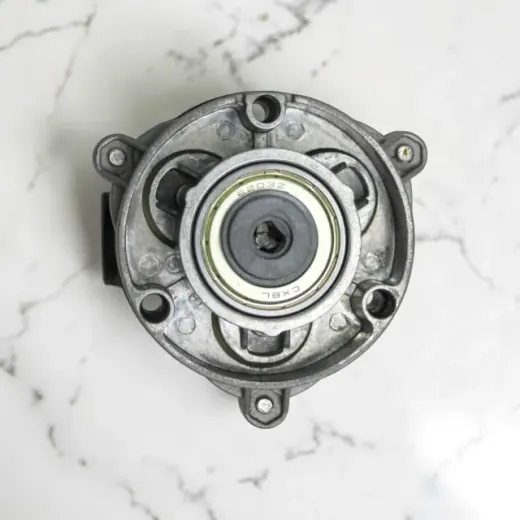
Domestic RO Pump Head (Taiwan-Made Replacement Part)
3-chamber replacement diaphragm pump head restoring 75–95 PSI pressure to healthy 24V booster motors.
Inside every domestic RO pump, the electric motor rarely fails first—the rubber diaphragm and internal check valves inside the front plastic head wear out or score from grit. Swapping just this 3-chamber diaphragm head assembly revives full 70–95 PSI membrane pressure at a fraction of whole-pump cost.
Common Size / Rating Options
75 GPD100 GPD
Application Scale & Replacement Verification
Scale: Domestic / HomeBrand: Axtron
Compare housing dimensions, port diameter, and membrane GPD capacity before ordering spares or requesting local dealer quotes. Verify System Fit in Water Planner →
Before You Install: Mark the front head orientation before loosening the 3 outer Allen bolts, align the triangular wobble-bearing lobes cleanly into the 3 diaphragm pistons, and cross-tighten bolts evenly.
Key Technical Specs
| System Series | Axtron |
|---|---|
| Application Duty | Domestic / Home |
| Nominal Supply Voltage | 24V DC (Requires Matching SMPS Adapter) |
| Working Outlet Pressure | 70–95 PSI at Membrane Feed |
Right Fit When
- Domestic 75–100 GPD 24V RO motors whose electric bearings spin quietly yet fail to push past 45 PSI.
- Leaking pumps dripping clean water out of the small side weep hole behind the pump head.
When To Skip or Double-Check
- Skip buying only a pump head if the electric motor itself is seized, smells burnt, hums loudly without spinning, or has rusted shaft bearings.
Signs This Part Is Failing
- Water drips continuously from the small side weep hole between head and motor housing
- Motor spins smoothly yet discharge gauge struggles past 40–50 PSI
- Pump builds weak flow despite clean Stage 1–3 pre-filters and full 24V supply
Diagnostic Checklists If Something Goes Wrong
Step 1 · Confirm the electric motor spins smoothly before ordering
Does the motor shaft rotate freely and quietly without grinding bearings or tripping the 24V adapter?
Unbolt the old head and power the bare motor for 2 seconds: smooth silent spin confirms only the head is worn.
Common Questions
Does a Taiwan replacement pump head fit Chinese 100 GPD motors?
Most 75–100 GPD RO pumps share the standard 3-bolt triangular face pattern; confirm bolt spacing and shaft wobble-cam alignment against your old head.
How can I stop a new pump head from failing early?
Keep Stage 1 sediment fresh (every 3–6 months) so sand grains never lodge inside the tiny internal rubber check valves.