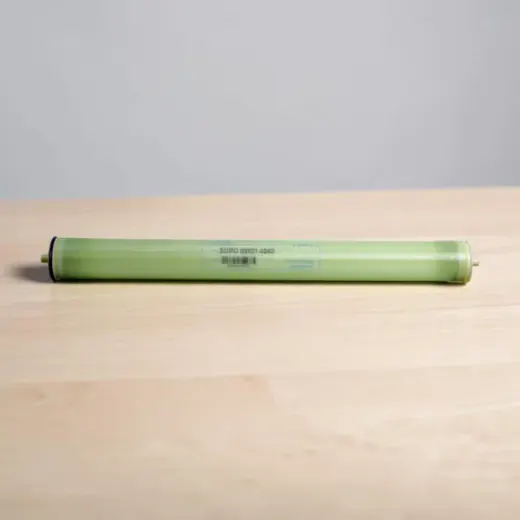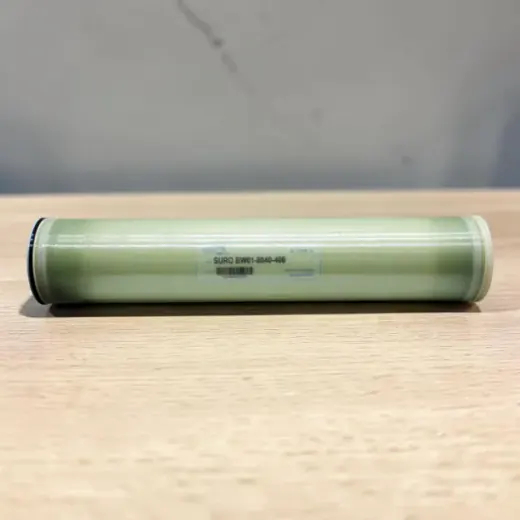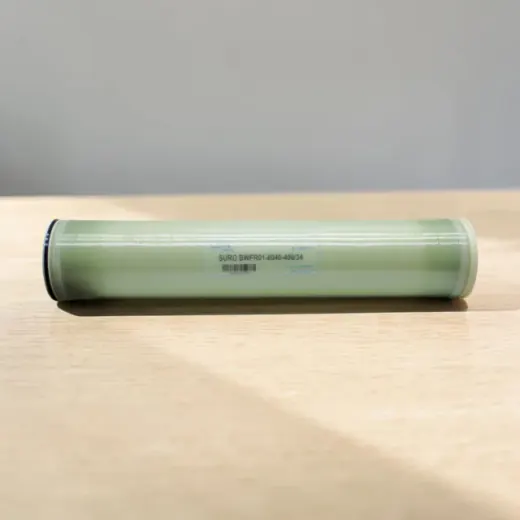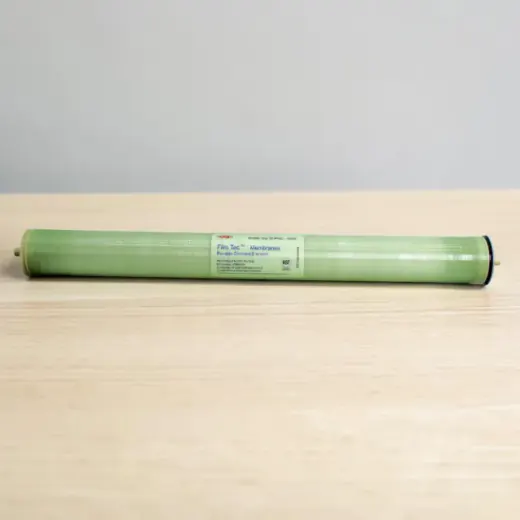
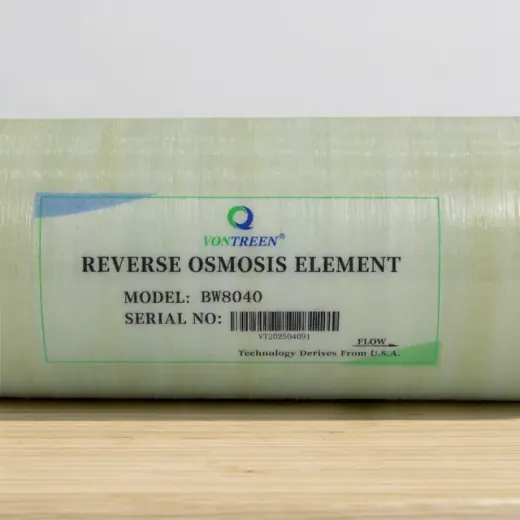
Vontreen BW8040 Commercial RO Membrane (Reverse Osmosis Element, Up to 5,000 TDS)
8040 BW high-rejection brackish element (~10,500 GPD / ~1,650 L/hr) engineered for 150–225 PSI industrial RO vessels.
Commercial fiberglass-wrapped polyamide RO element operating inside 8040 FRP or SS304 pressure vessels (~10,500 GPD / ~1,650 L/hr per element). Built with rigid fiberglass outer wrap and pH 1–13 CIP tolerance for continuous bottling, boiler makeup, and industrial plant shifts.
Common Size / Rating Options
40408040
Application Scale & Replacement Verification
Scale: Commercial / IndustrialBrand: Vontron
Compare housing dimensions, port diameter, and membrane GPD capacity before ordering spares or requesting local dealer quotes. Verify System Fit in Water Planner →
Before You Install: Install 8040 elements strictly in the direction of feed water flow with the U-cup brine seal at the upstream cap end (lip flaring toward feed), lubricate interconnector O-rings with food-grade silicone or glycerin, and always keep the downstream thrust cone seated.
Key Technical Specs
| Manufacturer / Series | Vontron |
|---|---|
| Application Duty | Commercial / Industrial |
| Element Construction | Spiral-Wound Polyamide Thin-Film Composite |
| Max Pressure Drop Limit | 15 PSI per Element / 50 PSI per Vessel |
Right Fit When
- 8040 multi-element or single-element FRP/SS vessels operating at 150–225 PSI with upstream 5 µm Jumbo/multi-round guard filtration.
- Industrial bottling, pharma pre-EDI, and brackish borehole skids up to 5,000–10,000 ppm TDS.
When To Skip or Double-Check
- Never feed >0.0 ppm free chlorine or high hardness without activated carbon / SMBS dechlorination and active antiscalant dosing—even a 1-hour chlorine spike ruins a 8040 element permanently.
- Confirm vessel diameter (8-inch ID) and permeate interconnector style before pulling end caps.
Signs This Part Is Failing
- Differential pressure (Delta-P) across the 8040 pressure vessel climbs >15 PSI above baseline
- Permeate conductivity spikes on a vessel port from pinched interconnector O-rings or chlorine oxidation
- Normalized permeate LPH drops 15%+, signaling scale or biofouling requiring chemical CIP cleaning
Diagnostic Checklists If Something Goes Wrong
Step 1 · Measure Vessel Differential Pressure (Delta-P) across 8040 housing
Has Feed Header PSI minus Concentrate Header PSI risen >15 PSI per element (or >15% above commissioning day)?
Read calibrated glycerin pressure gauges on the vessel feed inlet and brine concentrate outlet simultaneously.
Common Questions
How do I know if a 8040 membrane needs CIP cleaning vs replacement?
If permeate flow dropped alongside rising Delta-P (fouling/scaling), CIP chemical cleaning usually restores flux. If flow rose abnormally while TDS spiked (chlorine burn or telescoping), the sheet is damaged and needs replacement.
Which direction does the brine seal face inside a 4040/8040 housing?
Always mount the U-cup brine seal on the upstream (feed) side of each element with the open groove/lip facing into the incoming feed flow so water pressure flares it tight against the vessel wall.