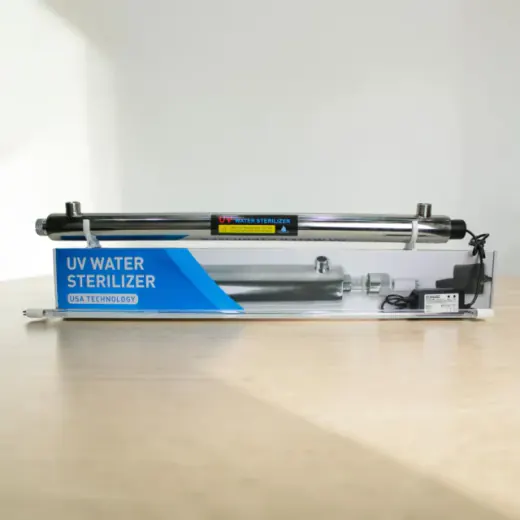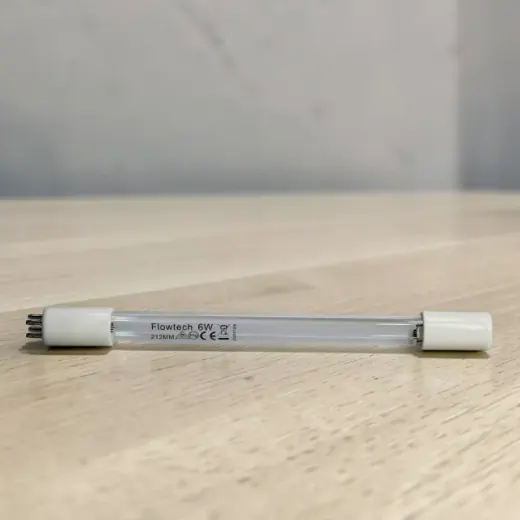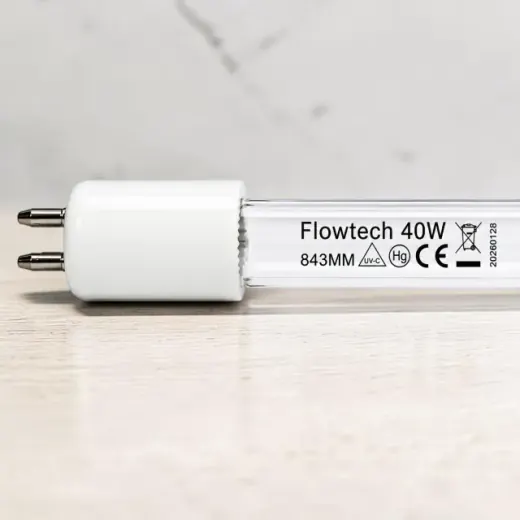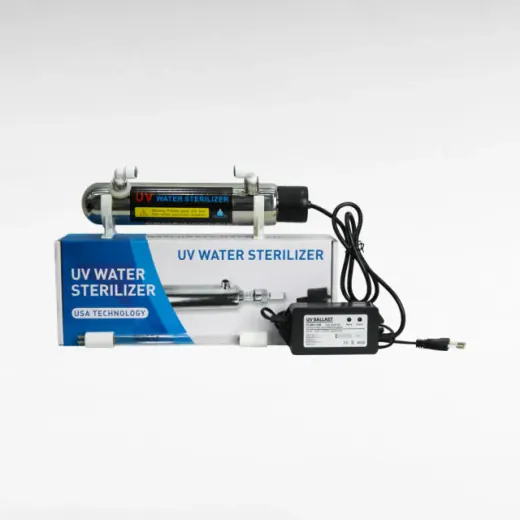
Stainless Steel UV-C Disinfection Reactors & Multi-Lamp Commercial Racks
SS304/SS316L UV-C 254nm disinfection reactors & multi-lamp commercial racks killing 99.99% of microbes.
Electropolished stainless chambers housing high-transmittance quartz sleeves and 254nm germicidal UV-C lamps—inactivating bacteria, viruses, and chlorine-resistant Cryptosporidium/Giardia cysts cleanly at Class A (40 mJ/cm²) or Class B (16 mJ/cm²) dosage without chemical taste or THM byproducts.
Common Size / Rating Options
110VAC220VAC
Application Scale & Replacement Verification
Scale: Commercial ROBrand: Engineering Family
Compare housing dimensions, port diameter, and membrane GPD capacity before ordering spares or requesting local dealer quotes. Verify System Fit in Water Planner →
Before You Install: Always slide the dry quartz sleeve into the chamber and pressure-test seals WITH WATER RUNNING before inserting the fragile UV-C lamp—protecting the lamp and ballast from accidental sleeve leaks.
Key Technical Specs
| Engineering Category | Commercial RO · UV-C Water Disinfection Chambers |
|---|---|
| Field Variants Tracked | 240 dimensional & pressure configurations |
| Industry Standards | NSF/ANSI 55 Class A · NSF/ANSI 55 Class B · CE / UL |
| Wattage | 6W, 12W, 16W, 25W (+5 more) |
| Flow | 1 GPM, 2 GPM, 4 GPM, 6 GPM (+6 more) |
| Alloy | SS304 Mirror-Polished Chamber, SS316L Sanitary / High-Chloride Chamber |
| Certification | Standard Post-RO Polish, NSF 55 Class A with UV Intensity Sensor & Solenoid Port |
Right Fit When
- Final microbial barrier on RO permeate storage loops, bottling lines, and whole-house well mains.
- Pairs with 5 µm sediment filtration (plus water softening if hardness >7 gpg / 120 ppm).
- Field aliases & trade names: UV Sterilizer, Viqua/Sterilight Chamber, 254nm UV Disinfection, Stainless UV Barrel.
- Engineered to NSF/ANSI 55 Class A, NSF/ANSI 55 Class B, CE / UL criteria where applicable.
When To Skip or Double-Check
- NEVER install UV on cloudy, muddy, or high-iron/hard raw water without pre-filtration—particulates cast shadows shielding microbes, and calcium/iron crusts quartz sleeves solid!
Signs This Part Is Failing
- Quartz sleeve mineral scaling blocking UV light
- Failed lamp/ballast alarm
- Leaking chamber O-ring gland nut
Diagnostic Checklists If Something Goes Wrong
Step 1 · Stop end-cap gland nut dripping around quartz sleeve
Is water dripping out of the stainless end nut or wetting inside the quartz sleeve?
Unplug ballast, remove bulb, inspect sleeve for hairline cracks, and check silicone compression O-rings.
Common Questions
Class A (40 mJ/cm²) vs Class B (16 mJ/cm²) UV—which do I need?
Choose Class A (40 mJ/cm², NSF 55A) anytime water comes from wells, surface water, or questionable cisterns; Class B (16 mJ/cm²) is strictly supplemental polishing on already-disinfected city water.
Why leave UV reactors powered on 24/7?
Constant thermal operation prevents microbial dark-regrowth inside chamber pipes and triples filament life compared to frequent cold starts.