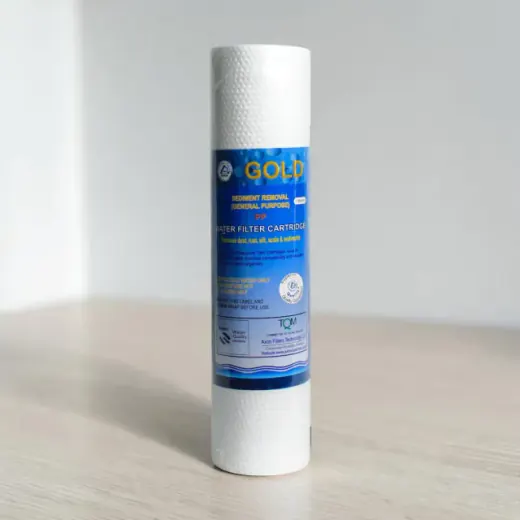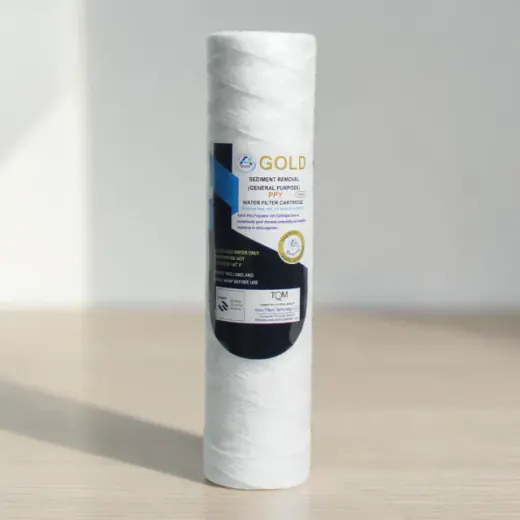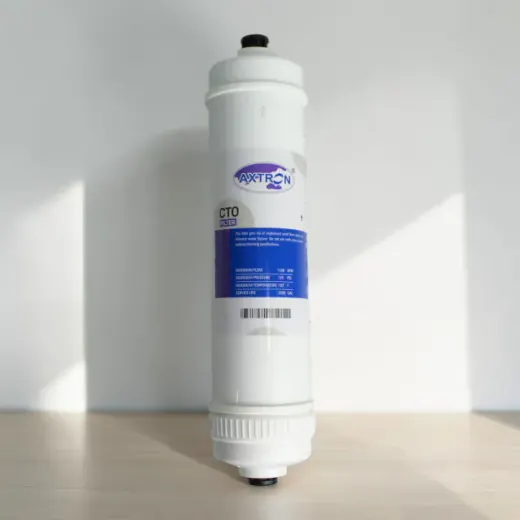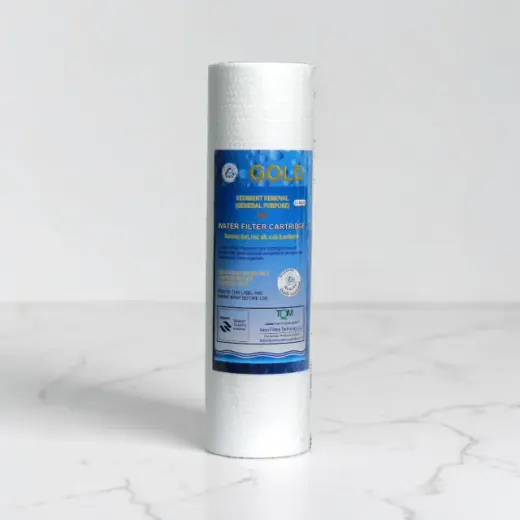
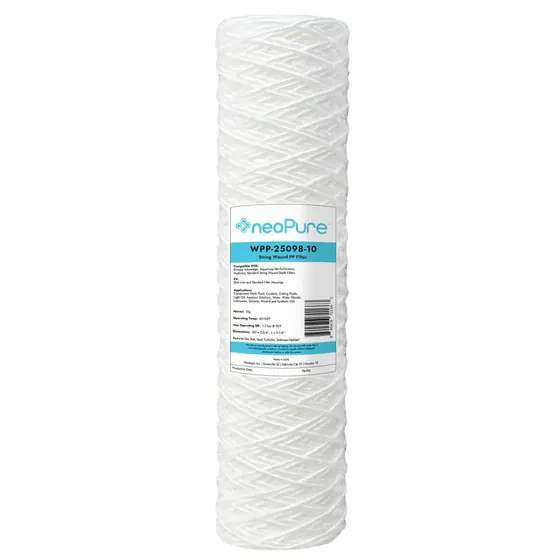
String-Wound Polypropylene & Cotton Sediment Cartridge
Honeycomb string-wound yarn cartridge holding heavy borewell mud, iron particulates, and clay without sudden choking.
Precision-wound polypropylene or bleached cotton yarn around a rigid perforated core creates diamond-shaped depth channels that capture heavy mud, pipe scale, and borehole sand with far higher dirt-holding capacity than smooth melt-blown cartridges.
Common Size / Rating Options
1 µm5 µm10 µm20 µm
Application Scale & Replacement Verification
Scale: Pre-FiltrationBrand: Engineering Family
Compare housing dimensions, port diameter, and membrane GPD capacity before ordering spares or requesting local dealer quotes. Verify System Fit in Water Planner →
Before You Install: Flush a quick 5-liter burst into a bucket after seating a fresh string-wound cartridge to clear harmless loose surface yarn lint before feeding RO membranes.
Key Technical Specs
| Engineering Category | Pre-Filtration · String-Wound Sediment |
|---|---|
| Field Variants Tracked | 1,728 dimensional & pressure configurations |
| Industry Standards | NSF/ANSI 42 · NSF/ANSI 61 |
| Size | 10" Slim (2.5"x10"), 20" Slim (2.5"x20"), 10" Big Blue (4.5"x10"), 20" Big Blue (4.5"x20") (+2 more) |
| Micron | 1 micron, 5 micron, 10 micron, 20 micron (+4 more) |
| Media | Polypropylene Yarn / PP Core, Bleached Cotton / SS304 Core, Polypropylene Yarn / SS316 Core, High-Temp Glass Fiber / SS316 Core |
| Endcap | DOE (Double Open End), 222 O-Ring / Flat Cap, 226 O-Ring / Fin |
Right Fit When
- Gritty borewells, rusty municipal tanks, and muddy rural feeds that blind ordinary spun filters.
- Available across 10", 20" Slim, and 20" Big Blue industrial housings (1 to 50 µm).
- Field aliases & trade names: Wound Yarn Filter, Dori Filter (PK/IN), Thread Sediment Cartridge, High-Dirt Depth Wound Filter.
- Engineered to NSF/ANSI 42, NSF/ANSI 61 criteria where applicable.
When To Skip or Double-Check
- Avoid cotton-wound cartridges on biologically active untreated surface water where organic cotton fibers can degrade—stick to 100% polypropylene yarn.
Signs This Part Is Failing
- Channeling of fine silt under high delta-P
- Severe pressure drop across pre-filter housing
- Clogged core restricting booster pump suction
Diagnostic Checklists If Something Goes Wrong
Step 1 · Measure Delta-P across housing gauges
Has outlet pressure dropped >15 PSI below inlet pressure?
Compare inlet and outlet pressure gauges (or crack downstream line) under peak flow.
Common Questions
String-wound vs spun melt-blown—when should I pick string-wound?
Pick string-wound whenever incoming water carries heavy sand, borewell clay, or rust flakes that choke smooth spun candles within weeks.
Are cotton string-wound cartridges safe for drinking water?
Polypropylene yarn is universal for cold potable water and never decomposes; cotton yarn is mostly reserved for hot oil, solvent, or high-temperature industrial lines.