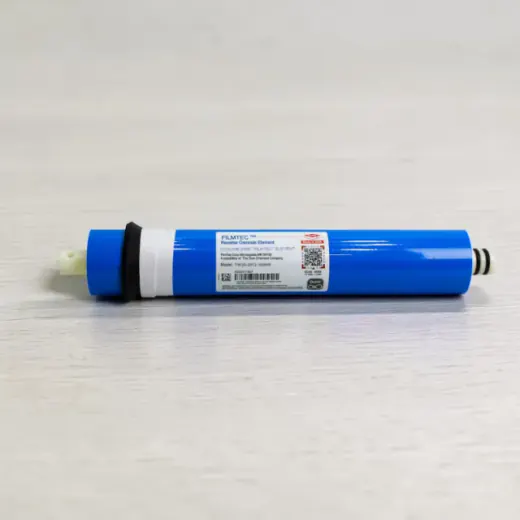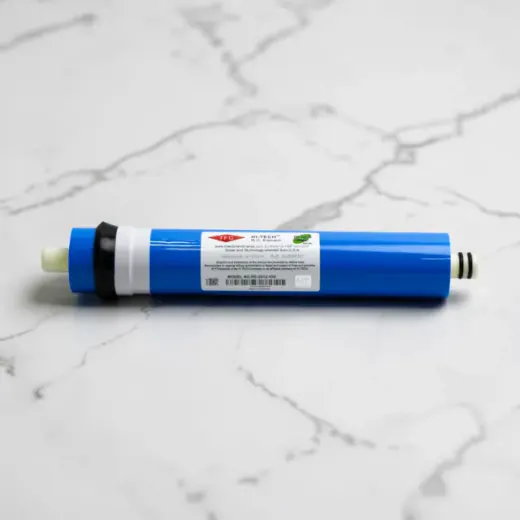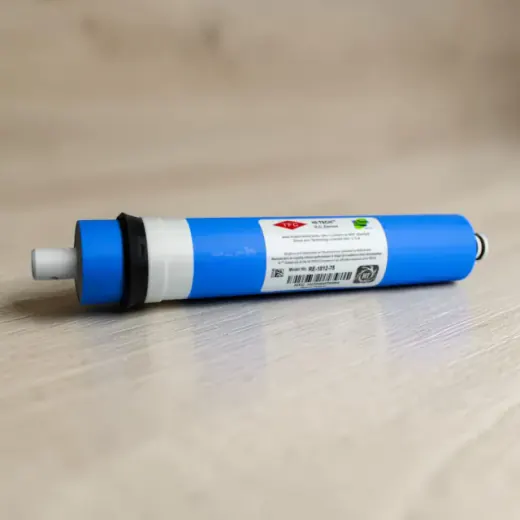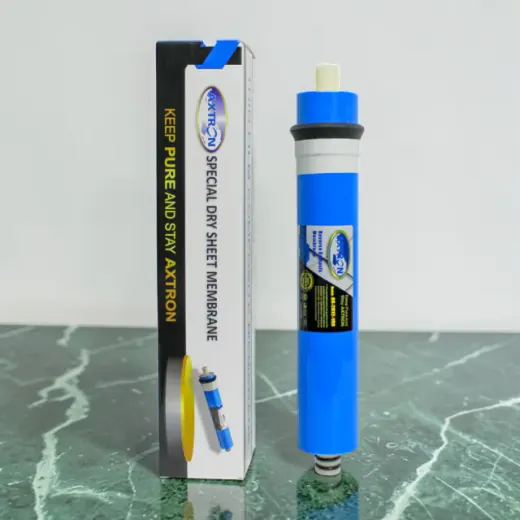
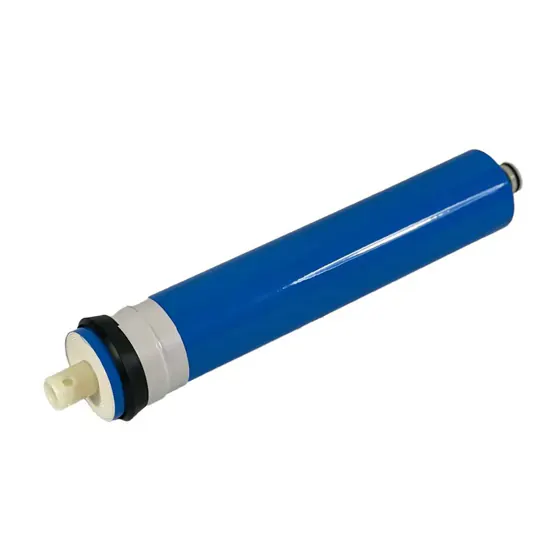
Residential & Light Commercial Spiral-Wound TFC RO Membrane
0.0001 µm spiral thin-film composite RO element (1812/2012/3012) stripping 95–98% TDS, arsenic, lead & hardness.
Spiral-wound polyamide thin-film composite sheets selectively pass H2O molecules at 50–400 GPD while rejecting 95–98% of dissolved salts, heavy metals (arsenic, lead), fluoride, nitrates, and PFAS out the concentrate drain—serving as the core desalination engine of domestic and light-commercial RO units.
Common Size / Rating Options
1810181220122812
Application Scale & Replacement Verification
Scale: Residential ROBrand: Engineering Family
Compare housing dimensions, port diameter, and membrane GPD capacity before ordering spares or requesting local dealer quotes. Verify System Fit in Water Planner →
Before You Install: Lube both small tail O-rings and the flared outer brine skirt lightly with food-grade silicone grease, push tail-first until bottomed squarely in the shell socket, and discard the first 45 minutes of product water.
Key Technical Specs
| Engineering Category | Residential RO · Thin-Film Composite (TFC) RO Membranes |
|---|---|
| Field Variants Tracked | 7,440 dimensional & pressure configurations |
| Industry Standards | NSF/ANSI 58 · WQA Gold Seal · IAPMO R&T |
| Size | 1810, 1812, 2012, 2812 (+3 more) |
| Gpd | 24 GPD, 36 GPD, 50 GPD, 75 GPD (+12 more) |
| Chemistry | Standard 0.0001 micron TFC Polyamide (60 PSI), Ultra-Low-Pressure XLE 0.0001 micron (40 PSI), High-TDS Brackish 2000ppm 0.0001 micron, NSF 58 Dry-Stored Long-Shelf 0.0001 micron |
| Series | DuPont FilmTec TW30-Style, Vontron ULP-Style, Hydranautics/Toray-Style, CSM/Kemflo-Style (+1 more) |
Right Fit When
- Standard 1812 (50–100 GPD), 2012 (120–200 GPD), and 3012/3013 (300–400 GPD) shells.
- Feed TDS up to ~2,000 ppm driven by 60–100 PSI booster pressure and 0.0 ppm chlorine.
- Field aliases & trade names: RO Membrane, FilmTec Element, TFC Membrane 0.0001 Micron, Home RO Jali (PK/IN).
- Engineered to NSF/ANSI 58, WQA Gold Seal, IAPMO R&T criteria where applicable.
When To Skip or Double-Check
- NEVER upgrade capacity (e.g., 50 -> 150 GPD) without upgrading the matching drain flow restrictor—and NEVER install without active carbon protection against chlorine.
Signs This Part Is Failing
- Permeate TDS creeping >10% of feed TDS
- Near-zero water output despite pump pressure (scaled/fouled)
- Torn brine seal causing raw water bypass
Diagnostic Checklists If Something Goes Wrong
Step 1 · Measure pure-port TDS rejection % before mineral stages
Has direct membrane permeate TDS risen past 10% of raw feed water TDS?
Close the tank valve, run pump 5 minutes, and measure raw feed vs direct membrane pure port.
Common Questions
How do I calculate RO membrane % salt rejection?
Rejection % = ((Raw Feed TDS − Pure Membrane TDS) ÷ Raw Feed TDS) × 100. Healthy TFC membranes score 94–98%.
Why do membranes sometimes burn out within 3 months?
Over 90% of premature deaths are caused by expired/un-seated carbon blocks letting chlorine oxidize the sheet, or clogged flow restrictors causing solid calcium crusting.