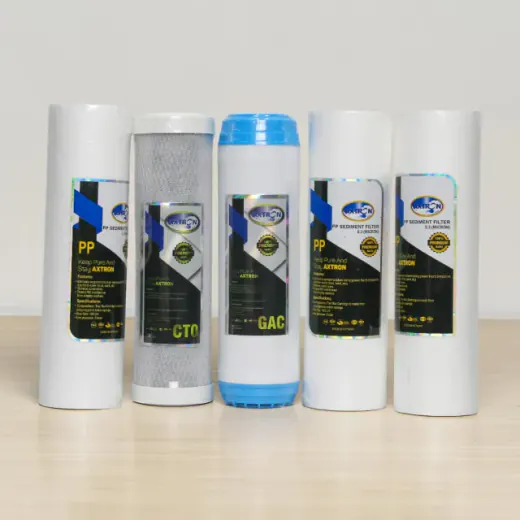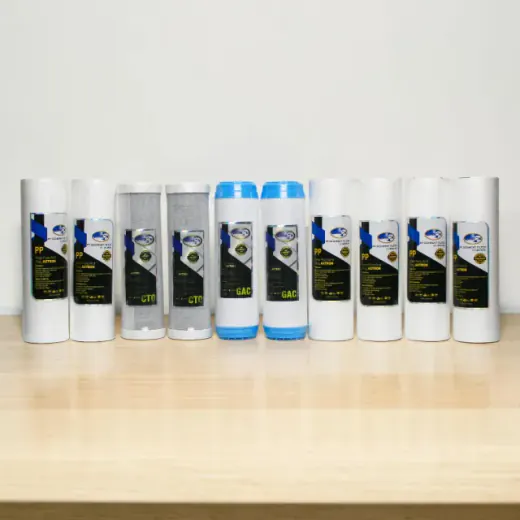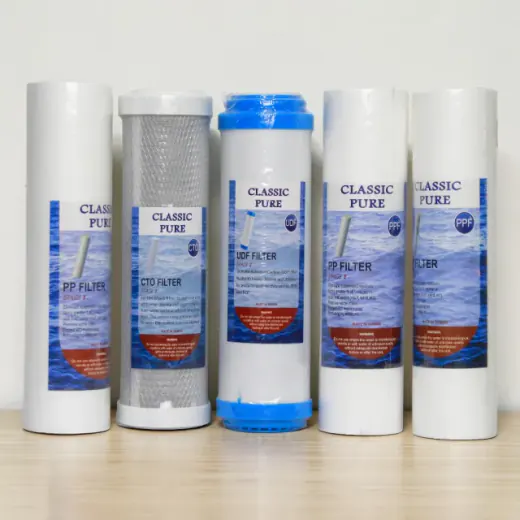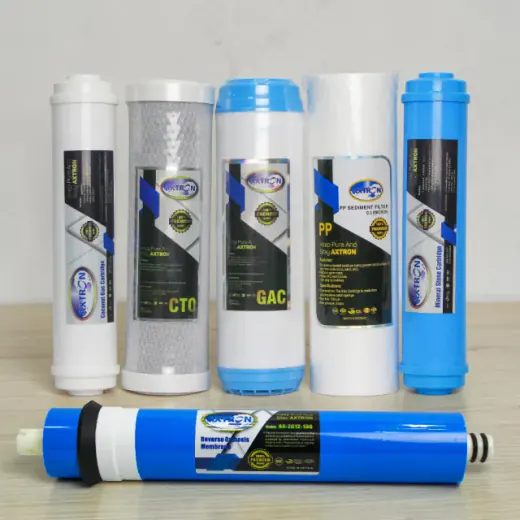
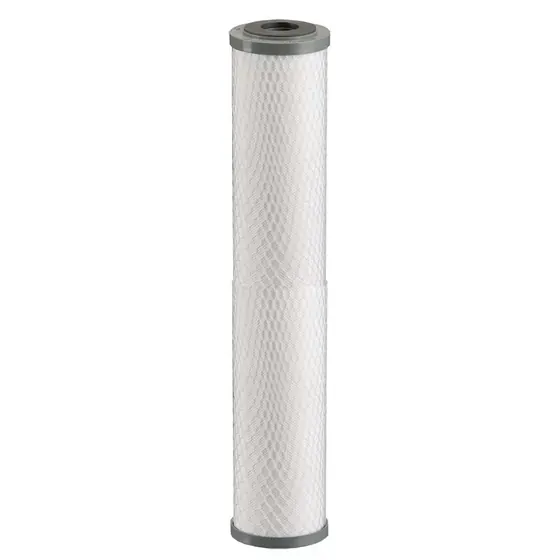
NSF 53 / 401 / P473 PFAS, Lead, Cyst & Chloramine Carbon Blocks
Certified 0.5 µm health-effects catalytic carbon & heavy-metal binder block targeting lead, PFAS, cysts & pharmaceuticals.
Dense 0.5-micron extruded catalytic carbon compounded with selective ion-exchange/zeolite heavy-metal media tested to NSF/ANSI 53, 401, and P473—removing dissolved lead, mercury, Cryptosporidium/Giardia cysts, PFOA/PFOS, and trace pharmaceuticals without wastewater.
Common Size / Rating Options
0.5 µm1 µm
Application Scale & Replacement Verification
Scale: Pre-FiltrationBrand: Engineering Family
Compare housing dimensions, port diameter, and membrane GPD capacity before ordering spares or requesting local dealer quotes. Verify System Fit in Water Planner →
Before You Install: Stick strictly to rated gallon capacity (typically 500–1,500 gallons / 6 months)—heavy metals and PFAS break through silently with ZERO taste or odor warning once sites saturate.
Key Technical Specs
| Engineering Category | Pre-Filtration · Health-Effects Carbon Blocks (NSF 53/401) |
|---|---|
| Field Variants Tracked | 216 dimensional & pressure configurations |
| Industry Standards | NSF/ANSI 42 · NSF/ANSI 53 · NSF/ANSI 401 · NSF/ANSI P473 |
| Size | 10" Slim (2.5"x10"), 20" Slim (2.5"x20"), 10" Big Blue (4.5"x10"), 20" Big Blue (4.5"x20") |
| Micron | 0.5 micron, 1 micron |
| Target | PFAS / PFOA / PFOS + Lead + Cyst, Chloramine Catalytic + VOC, Heavy Metal (Lead/Mercury) + Pharmaceutical NSF 401 |
| Seal | EPDM Gasket, Santoprene Gasket, Buna-N Gasket |
Right Fit When
- Municipal drinking taps with old lead service pipes, PFAS alerts, or boil-free cyst protection.
- High-spec under-sink drinking filters and non-RO kitchen faucets (>35 PSI mains).
- Field aliases & trade names: PFAS Carbon Filter, Lead Removal Carbon Block, Chloramine Catalytic Block, Cyst 0.5 Micron Carbon.
- Engineered to NSF/ANSI 42, NSF/ANSI 53, NSF/ANSI 401 criteria where applicable.
When To Skip or Double-Check
- Do NOT use tight 0.5 µm health blocks on muddy, un-filtered well water without a 5 µm sediment pre-stage—silt blinds sub-micron blocks in days; also note carbon blocks do not lower high TDS salts.
Signs This Part Is Failing
- Reduced flow from sub-micron 0.5µm block loading
- Chloramine/PFAS breakthrough once rated gallon capacity expires
Diagnostic Checklists If Something Goes Wrong
Step 1 · Track rated gallon / 6-month timer before breakthrough
Has the cartridge exceeded 6–12 months or its rated gallon count without noticeable flow loss?
Check install date or inline gallon totalizer—lead and PFAS adsorption saturate invisibly.
Common Questions
What separates NSF 42 vs NSF 53 vs NSF 401?
NSF 42 covers aesthetics (chlorine, taste, odor); NSF 53 certifies health contaminants (lead, cysts, VOCs, PFAS/P473); NSF 401 covers emerging trace compounds (pharmaceuticals, herbicides).
Can an NSF 53 carbon block replace RO for high-arsenic or salty borewells?
No—carbon blocks do not lower dissolved salts or efficiently capture inorganic arsenic V; brackish or arsenic water still needs RO.