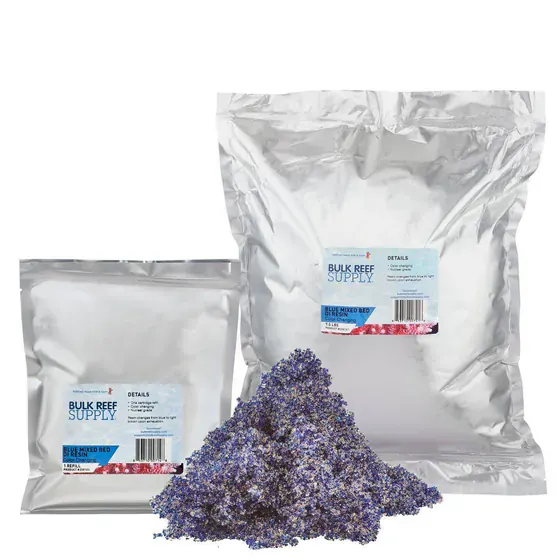
Ion Exchange Softening, Deionization & Selective Resins
Cation softening, mixed-bed DI & selective arsenic/nitrate/tannin ion-exchange resins for FRP tanks & shells.
Uniform synthetic polymer beads engineered for heavy-duty water softening (strong-acid cation Na⁺ form, 8% or 10% cross-linked), 0-ppm DI demineralization (H⁺/OH⁻ mixed bed), or selective capture of nitrates, tannins, PFAS, and arsenic without chemicals passing downstream.
Common Size / Rating Options
1 lb Pouch5 lb Bucket0.25 Cubic Foot0.5 Cubic Foot
Application Scale & Replacement Verification
Scale: Filter MediaBrand: Engineering Family
Compare housing dimensions, port diameter, and membrane GPD capacity before ordering spares or requesting local dealer quotes. Verify System Fit in Water Planner →
Before You Install: Add support gravel underbedding carefully in commercial >10" FRP tanks, fill 1/3 with water before pouring resin, and keep 35–40% top freeboard so vigorous backwashing never washes resin beads out the drain.
Key Technical Specs
| Engineering Category | Filter Media · Ion Exchange Resins |
|---|---|
| Field Variants Tracked | 288 dimensional & pressure configurations |
| Industry Standards | NSF/ANSI 44 · NSF/ANSI 61 · WQA Gold Seal · FDA 21 CFR 173.25 |
| Resin | Strong Acid Cation (SAC) 8% Cross-Linked Gel, Strong Acid Cation (SAC) 10% High-Chlorine Gel, Weak Acid Cation (WAC) Dealkalization, Strong Base Anion (SBA Type I) Chloride/Hydroxide (+8 more) |
| Grade | Purolite-Equivalent Grade, Lanxess Lewatit-Equivalent, DuPont AmberLite-Equivalent, NSF 61 Food/Potable Grade |
| Pack | 1 lb Pouch, 5 lb Bucket, 0.25 Cubic Foot, 0.5 Cubic Foot (+2 more) |
Right Fit When
- FRP commercial/whole-house water softeners (8% vs 10% cross-linked for chlorine tolerance).
- Commercial twin-bed / mixed-bed deionization vessels polishing RO permeate to ultrapure grades.
- Field aliases & trade names: Purolite Resin, Softener Beads, Amberlite/Lewatit Resin, Mixed Bed DI Resin.
- Engineered to NSF/ANSI 44, NSF/ANSI 61, WQA Gold Seal criteria where applicable.
When To Skip or Double-Check
- NEVER load 8% standard cation softening resin directly onto heavy chlorinated city water without upstream carbon or upgrading to 10% cross-linked resin—chlorine oxidizes 8% beads into mushy pressure-choking slime!
Signs This Part Is Failing
- Hard water scale returning after regeneration
- Resin clumping from chlorine oxidation (mushy beads)
- Rising conductivity in DI/EDI loops
Diagnostic Checklists If Something Goes Wrong
Step 1 · Catch chlorine mushing & severe tank pressure drop
Did softener flow choke sharply while beads turned pale, soft, and gelatinous?
Pull a core sample of resin and rub beads between fingers (healthy beads feel hard like glassy sand; oxidized beads squish!).
Common Questions
8% vs 10% cross-linked softening resin—when is 10% worth the extra cost?
Anytime raw city water contains free chlorine/chloramines (and no carbon filter sits ahead of the softener) or water runs warm—10% cross-linked resin lasts twice as long before oxidizing.
What is the typical softening capacity of 1 cubic foot of standard cation resin?
Roughly 24,000–30,000 grains of hardness per cubic foot depending on brine salt regeneration dosage (6–15 lbs salt per cu ft).