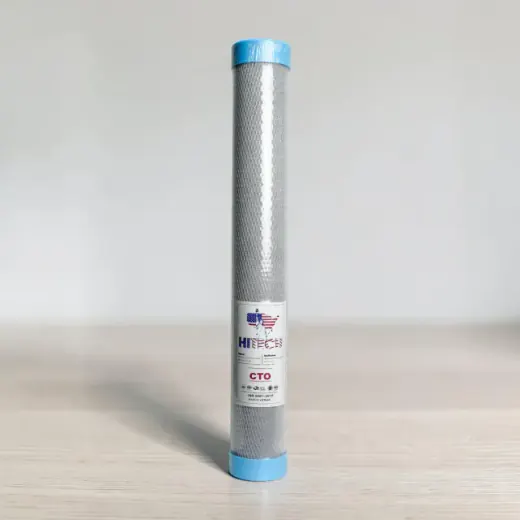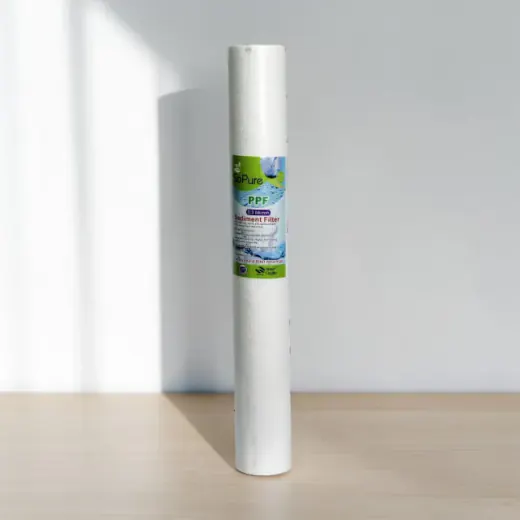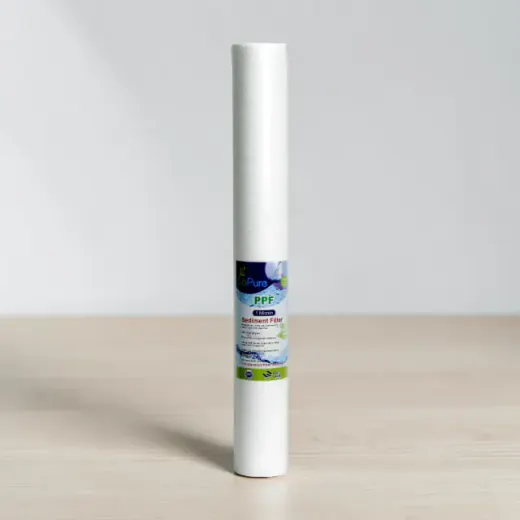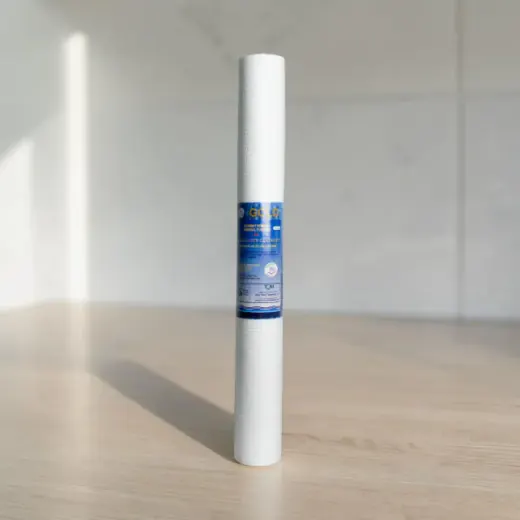
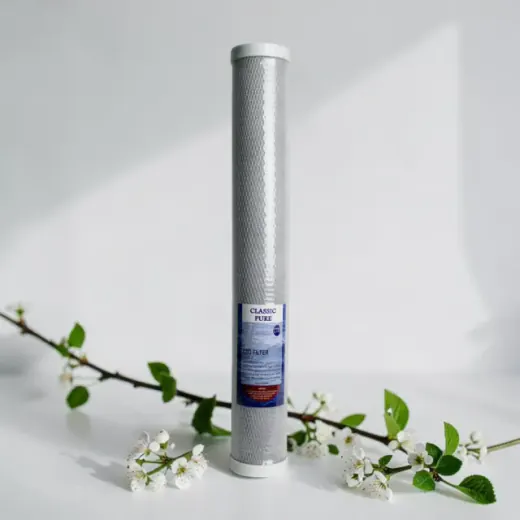
Classic Pure Taiwan CTO Activated Carbon Block Filter (20-Inch Slim Cartridge)
20" × 2.5" Slim extruded CTO carbon block removing free chlorine, VOCs, and chemical odors before they burn RO membranes.
Dense extruded coconut-shell activated carbon block engineered to adsorb chlorine, organic chemicals, and off-tastes across the entire cylinder wall while stopping fine 1–5 µm particulates. Flat rubber end gaskets lock between cap and sump base to prevent water channeling.
Common Size / Rating Options
1 µm5 µm20" Slim
Application Scale & Replacement Verification
Scale: Semi-CommercialBrand: Classic Pure
Compare housing dimensions, port diameter, and membrane GPD capacity before ordering spares or requesting local dealer quotes. Verify System Fit in Water Planner →
Before You Install: Make sure BOTH top and bottom flat rubber washers sit centered on the block—if either washer slips off, chlorinated water bypasses straight into your RO membrane.
Key Technical Specs
| Manufacturer / Series | Classic Pure |
|---|---|
| Cartridge / Bowl Size | 20" × 2.5" Slimline |
| Application Duty | Semi-Commercial |
| Standard Housing Format | 20" × 2.5" High-Flow Slimline |
Right Fit When
- Stage 2 or Stage 3 dechlorination shield inside 20" × 2.5" Slim housings on chlorinated municipal or treated water.
- Protecting thin-film polyamide RO membranes (which oxidize permanently at >0.05 ppm free chlorine).
When To Skip or Double-Check
- Check housing dimensions strictly: 10" Standard (2.5" OD), 20" Slim (2.5" OD), and 20" Jumbo (4.5" OD) blocks are NOT interchangeable.
Signs This Part Is Failing
- Chlorine smell or bitter chemical taste returns downstream once carbon saturates
- Booster pumps starve if mud bypasses Stage 1 and seals carbon pores
- High TDS follows shortly after if exhausted carbon lets chlorine burn the RO membrane
Diagnostic Checklists If Something Goes Wrong
Step 1 · Test outlet water for chlorine breakthrough
Can you smell swimming-pool chlorine or does a DPD test strip turn pink downstream of the carbon block?
Collect water right after the carbon housing (before the RO membrane) and check smell or DPD free-chlorine strip.
Common Questions
CTO carbon block vs GAC granular carbon—what is the difference?
GAC has loose granules for high flow and low pressure drop; CTO is compressed under heat into a solid block that traps finer particles and prevents water channeling.
Why must new carbon blocks be flushed before hooking up the membrane?
New activated carbon sheds harmless micro carbon dust on first wetting; flushing 5–10 liters to a bucket stops black dust from lodging inside pump valves and membrane leaves.