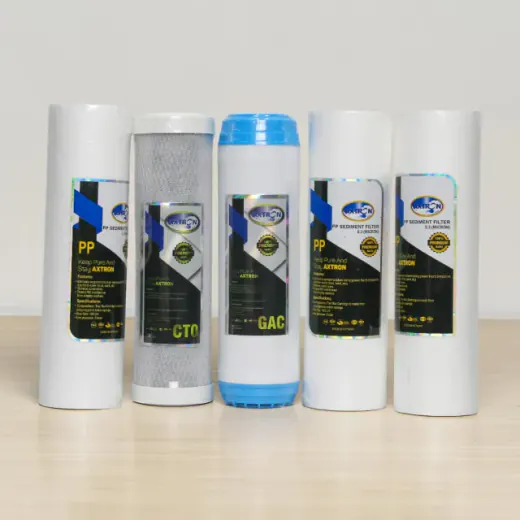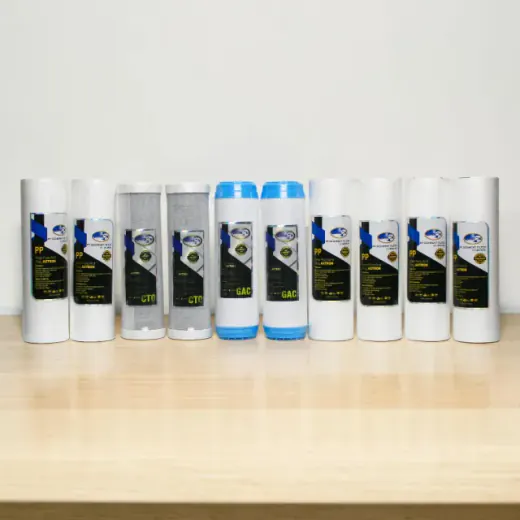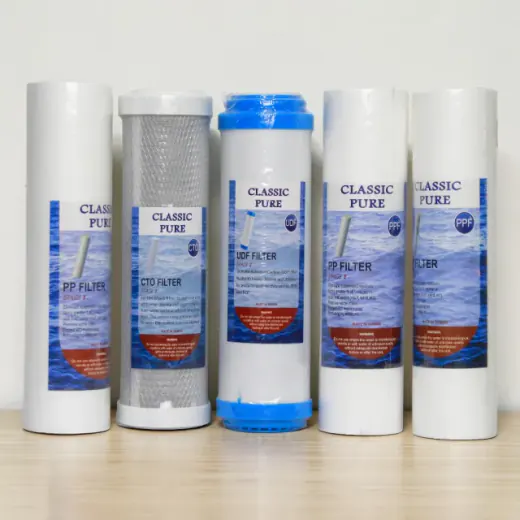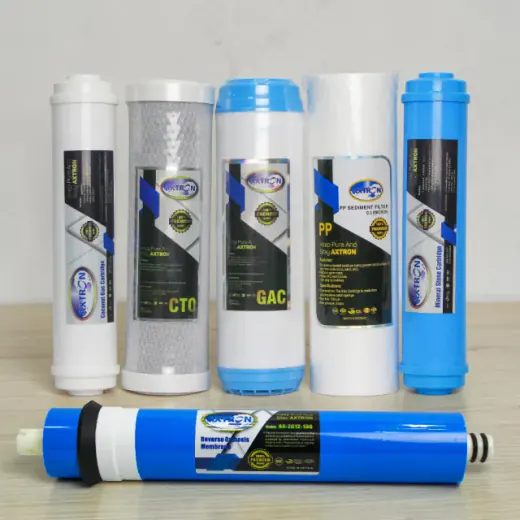
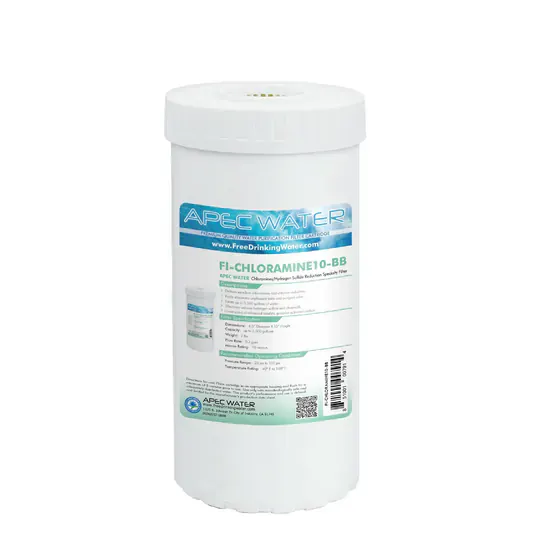
Dedicated Catalytic Carbon Cartridges for Chloramines & Hydrogen Sulfide
Surface-modified catalytic carbon cartridges cleaving persistent municipal chloramines & H2S odor.
Municipal utilities increasingly switch from free chlorine to Chloramines (chlorine + ammonia), which slip straight through ordinary CTO carbon blocks and eat polyamide RO membranes quickly. Catalytic activated carbon is surface-altered to rapidly split chloramine and rotten-egg H2S bonds.
Common Size / Rating Options
2.5"x12" Inline
Application Scale & Replacement Verification
Scale: Pre-FiltrationBrand: Engineering Family
Compare housing dimensions, port diameter, and membrane GPD capacity before ordering spares or requesting local dealer quotes. Verify System Fit in Water Planner →
Before You Install: Test effluent using a TOTAL Chlorine (not just Free Chlorine!) DPD strip—free chlorine strips read zero on chloraminated city water while chloramine silently destroys your RO membrane.
Key Technical Specs
| Engineering Category | Pre-Filtration · Catalytic Chloramine Carbon Cartridges |
|---|---|
| Field Variants Tracked | 80 dimensional & pressure configurations |
| Industry Standards | NSF/ANSI 42 · NSF/ANSI 61 · WQA Gold Seal |
| Size | 10" Slim (2.5"x10"), 20" Slim (2.5"x20"), 10" Big Blue (4.5"x10"), 20" Big Blue (4.5"x20") (+1 more) |
| Construction | Catalytic Extruded Carbon Block (1µm), Catalytic Carbon Block (5µm), Catalytic GAC Radial Flow, Catalytic GAC + KDF-55 Hybrid |
| Pack | Single, 2-Pack, 4-Pack, 6-Case |
Right Fit When
- Municipal water utilities treating with chloramines (monochloramine) ahead of RO or aquariums.
- Eliminating ammonia/chlorine smells and preventing rapid membrane oxidation in cities.
- Field aliases & trade names: Chloramine Filter, Centaur Carbon Cartridge, Catalytic GAC/Block, Monochloramine Pre-Filter.
- Engineered to NSF/ANSI 42, NSF/ANSI 61, WQA Gold Seal criteria where applicable.
When To Skip or Double-Check
- Standard 5–6 month change rules apply more strictly on chloramines—contact time matters, so avoid squeezing tiny single inline cartridges onto whole-house high-GPM lines; use 20" Slim/Big Blue or dual Stage 2+3 banks.
Signs This Part Is Failing
- Rapid RO membrane degradation despite standard carbon changes
- Swimming-pool/chemical smell in municipal city water
Diagnostic Checklists If Something Goes Wrong
Step 1 · Test Total Chlorine (not Free Chlorine) downstream
Are RO membranes dying inside 3–6 months even though Free Chlorine strips read zero?
Test water exiting the carbon block with a DPD TOTAL Chlorine reagent kit.
Common Questions
Why does standard coconut CTO carbon fail against chloramines?
Standard carbon reacts briskly with free chlorine (HOCl) but removes tightly bonded monochloramine slowly—requiring catalytic surface sites and longer contact time.
What happens to the ammonia left behind when catalytic carbon splits chloramine?
The carbon strips the reactive chlorine cleanly; the tiny harmless trace of leftover ammonia is then rejected ~90% by your RO membrane (or captured by DI resin in aquariums).