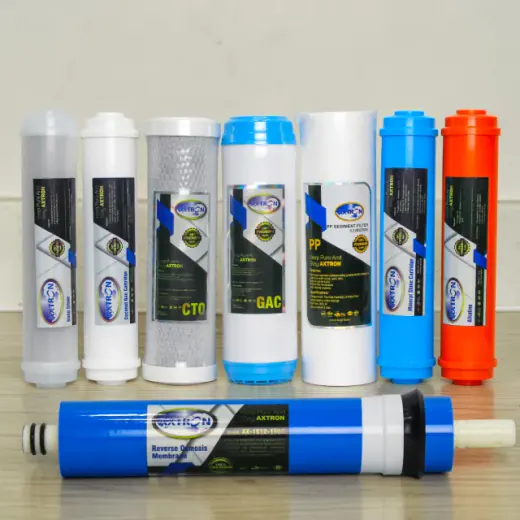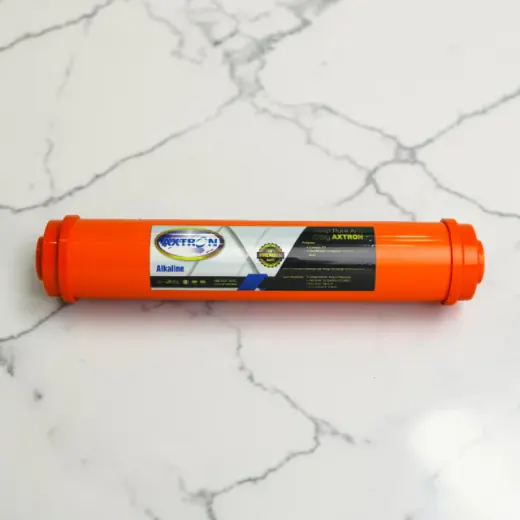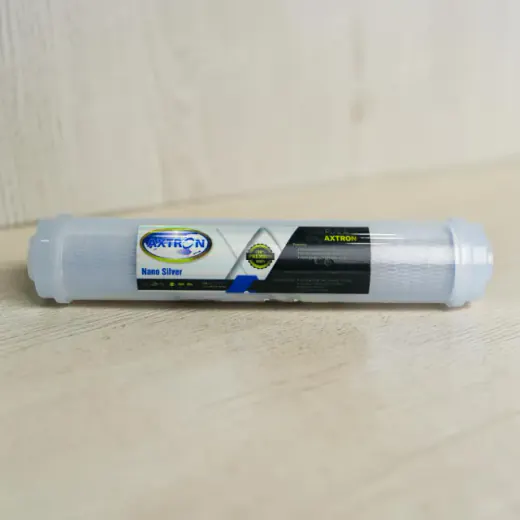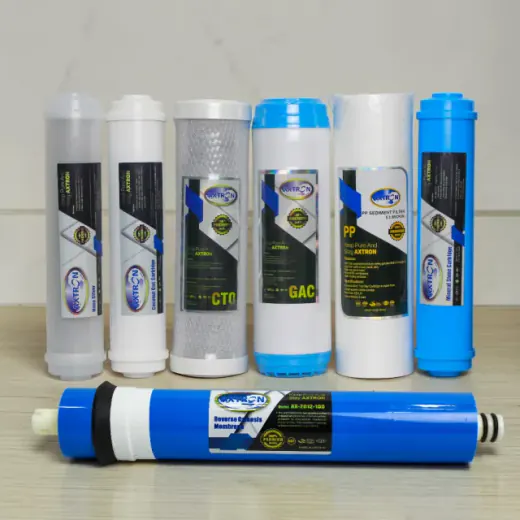
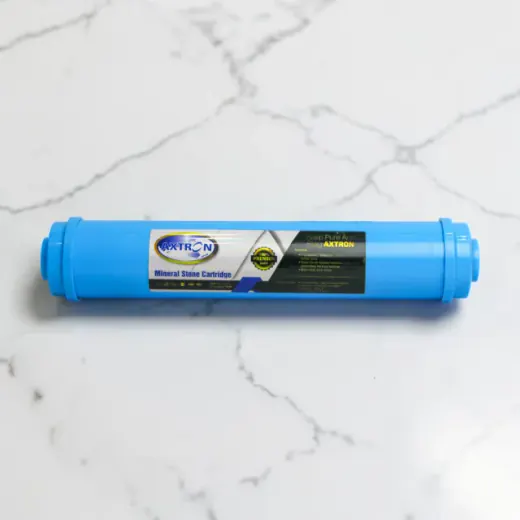
Axtron Mineral Water Filter Cartridge (Mineral Stone Post Filter for RO)
Inline mineral stone post-filter restoring balanced calcium/magnesium electrolytes to flat 0–30 ppm RO water.
Pure RO permeate sits slightly acidic (pH 6.0–6.6) once dissolved salts are stripped. Passing stored water across natural mineral & bio-ceramic balls restores smooth mouthfeel and healthy alkalinity right before the drinking faucet.
Application Scale & Replacement Verification
Scale: Domestic / HomeBrand: Axtron
Compare housing dimensions, port diameter, and membrane GPD capacity before ordering spares or requesting local dealer quotes. Verify System Fit in Water Planner →
Before You Install: Verify the FLOW arrow on the cartridge, mount horizontally after the storage tank tee, and flush 10–15 liters clear—mineral dust initially spikes TDS above 150 ppm until rinsed.
Key Technical Specs
| System Series | Axtron |
|---|---|
| Application Duty | Domestic / Home |
| Connection Thread / Port | 1/4" FPT or 1/4" Push-Fit Inline |
| Placement Stage | Post-Tank Final Polishing Line |
Right Fit When
- Domestic RO purifiers using 1/4" quick-connect or 1/4" NPT elbow inline post-filters.
- Households wanting smoother tea/coffee flavor and pH ~7.5–8.5 mineral water.
When To Skip or Double-Check
- Skip alkaline/mineral stages for aquariums, lab autoclaves, or steam irons requiring 0–15 ppm pure water—connect mineral stages ONLY to the drinking faucet leg.
Signs This Part Is Failing
- Drinking water tastes flat, rubbery, or chalky past the 12-month change interval
- pH test drops back below 7.0 as mineral/calcite media dissolves away
- Loose black fines or chalky haze if the cartridge was installed backward or unflushed
Diagnostic Checklists If Something Goes Wrong
Step 1 · Compare water BEFORE vs AFTER this inline cartridge
Does tap flow sputter weakly or taste rubbery/flat even though water disconnected BEFORE this cartridge blasts cleanly?
Shut the tank ball valve, pop the inlet tube into a bucket, open the tank valve 3 seconds to test upstream blast vs downstream flow.
Related System Troubleshooting Flows
Common Questions
Should a mineral or alkaline cartridge go BEFORE or AFTER the T33 post-carbon?
Place Mineral/Alkaline right after the storage tank tee, and finish with T33 coconut carbon (or Nano-Silver) last before the faucet for crispest flavor.
How often should inline post-filters be changed?
Every 12 months—both to keep taste crisp and to prevent stagnant bacterial biofilm inside post-tank housings.