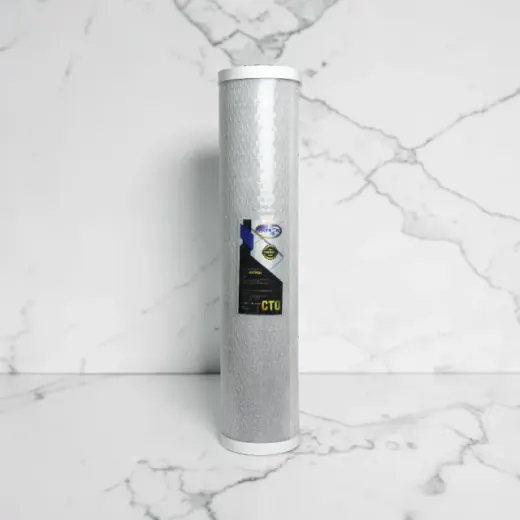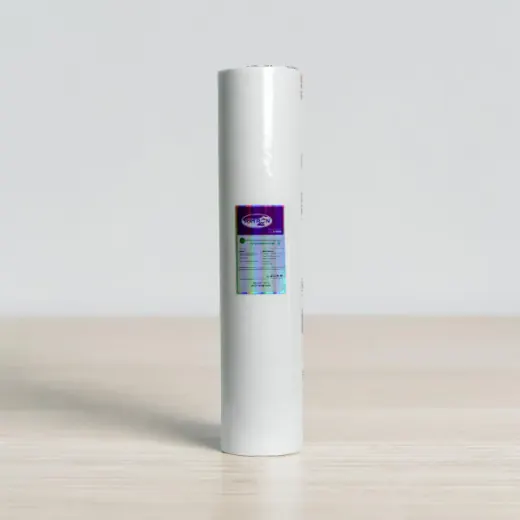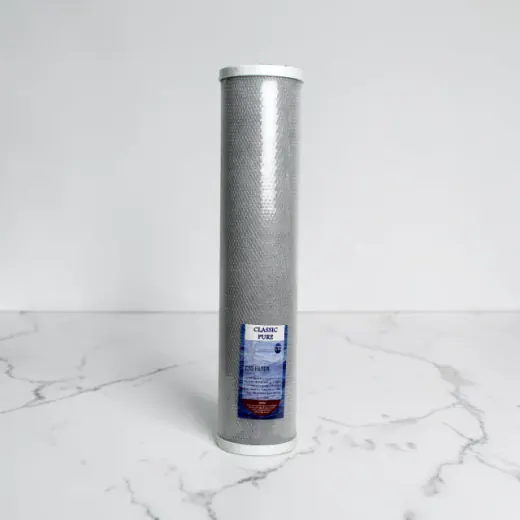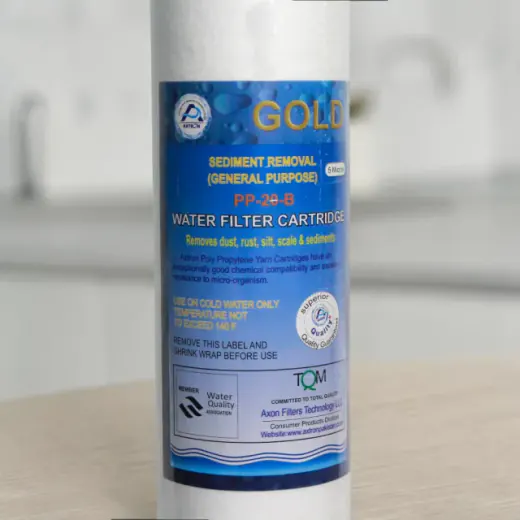
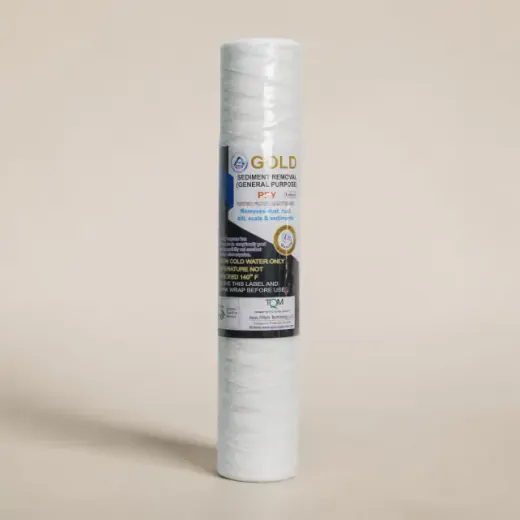
Axtron Gold Jumbo PPY 5 Micron (20 Inch String-Wound Sediment Filter Cartridge, 1000 Gram)
20" × 4.5" Big Blue Jumbo 5 µm string-wound honeycomb yarn sediment cartridge stopping rust, sand, and silt before downstream stages…
Deep honeycomb string-wound yarn holds substantially more heavy borewell sand and pipe rust than surface cartridges before pressure drops. Sized specifically for universal 20" × 4.5" Big Blue Jumbo sump bowls so zero grit reaches carbon blocks, diaphragm valves, or multistage impellers.
Common Size / Rating Options
5 µm1 µm20" Jumbo
Application Scale & Replacement Verification
Scale: Commercial / IndustrialBrand: Axtron Gold
Compare housing dimensions, port diameter, and membrane GPD capacity before ordering spares or requesting local dealer quotes. Verify System Fit in Water Planner →
Before You Install: Close both the cold inlet AND any pressurized tank/pump discharge valve before opening the sump—and peel ALL clear shrink-wrap plastic off the new cartridge (a surprisingly common zero-flow mistake!).
Key Technical Specs
| Manufacturer / Series | Axtron Gold |
|---|---|
| Nominal Pore Rating | 5 micron |
| Media Density Weight | 1000 g |
| Cartridge / Bowl Size | 20" × 4.5" Big Blue (Jumbo) |
| Application Duty | Commercial / Industrial |
Right Fit When
- Fits any standard 20" × 4.5" Big Blue Jumbo Double Open End (DOE) filter housing regardless of brand.
- Heavy mud, iron rust, and gritty borewell supplies that rapidly clog smooth spun filters.
When To Skip or Double-Check
- Verify exact housing height and diameter first: 20" × 4.5" Big Blue Jumbo will not seal or fit inside different housing footprints.
Signs This Part Is Failing
- Flow weakens sharply or booster pump chatters via LPS as silt blinds outer pores
- Cartridge turns dark rust/mud brown and begins collapsing inward under Delta-P
- Fine grit slips past if end-seal alignment misses the housing standpipe
Diagnostic Checklists If Something Goes Wrong
Step 1 · Confirm shrink-wrap was peeled & pressure drop across bowl
Did water pressure drop to zero right after a filter swap, or did flow fade steadily over weeks?
Unscrew the bowl: check for forgotten clear plastic shrink-wrap, or examine outer wall for dark brown/rust sludge.
Common Questions
Can a spun polypropylene or string-wound cartridge be washed and reused?
No—depth-filtration spun/wound fibers trap fine silt deep inside the core thickness; surface rinsing leaves the inner layers plugged and strains booster pumps.
When should a Stage 1 sediment filter be swapped?
Replace every 3–6 months, or immediately if the outer surface turns dark rust-brown or downstream pump pressure dips.