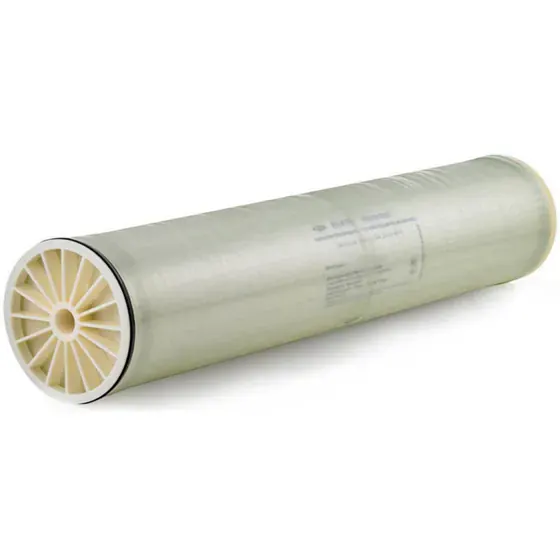
High-Rejection Reef Aquarium RO/DI Membranes & Dual-DI Add-On Stages
98–99% ultra-high-rejection reef RO membranes & dual-DI resin stages yielding pure 0-ppm silicate-free water.
Engineered specifically for saltwater reef aquariums and sensitive planted tanks where even 2–5 ppm post-RO silicate, phosphate, or nitrate triggers ugly diatom/hair algae blooms. High-rejection 98–99% membranes paired with dual cation/anion + color-changing mixed-bed DI stages slash expensive DI resin replacement costs 4–5×.
Common Size / Rating Options
181220123012
Application Scale & Replacement Verification
Scale: Residential ROBrand: Engineering Family
Compare housing dimensions, port diameter, and membrane GPD capacity before ordering spares or requesting local dealer quotes. Verify System Fit in Water Planner →
Before You Install: Check your RO membrane TDS BEFORE the DI resin chamber—upgrading a sluggish 94% membrane (passing 30 ppm into DI) to a crisp 99% membrane (passing 4 ppm into DI) makes DI cartridges last over 7× longer!
Key Technical Specs
| Engineering Category | Residential RO · Aquarium Reef RO/DI Membranes & Stages |
|---|---|
| Field Variants Tracked | 24 dimensional & pressure configurations |
| Industry Standards | Batch Wet-Tested 98-99% NaCl · NSF 58 Material |
| Size | 1812, 2012, 3012 |
| Gpd | 50 GPD, 75 GPD, 100 GPD, 150 GPD (+1 more) |
| Grade | 99% High-Rejection 0.0001 micron Reef Spec, Dual-Membrane Water-Saver Kit 0.0001 micron, Single/Dual Color-Changing DI Add-On Canister |
Right Fit When
- Saltwater coral reef setups, discus breeders, and laboratory 0-ppm DI stations.
- Domestic 1812 shells paired with matched flow restrictors, flush kits, and dual-inline TDS meters.
- Field aliases & trade names: Reef 99% Rejection Membrane, BRS/SpectraPure-Style 75 GPD, Aquarium Zero-TDS Add-On.
- Engineered to Batch Wet-Tested 98-99% NaCl, NSF 58 Material criteria where applicable.
When To Skip or Double-Check
- NEVER plumb an alkaline/mineral post-filter onto a reef RO/DI unit, and NEVER store 0-ppm DI water in cheap non-food-grade barrels that leach phosphates back in!
Signs This Part Is Failing
- DI resin exhausting within days due to >5 ppm post-RO TDS leakage
- CO2 saturation
- Algae blooms in reef tanks from silicate breakthrough
Diagnostic Checklists If Something Goes Wrong
Step 1 · Catch rapid DI resin exhaustion (High CO2 or Membrane Drift)
Did color-changing DI resin turn completely amber/brown inside just 2–4 weeks?
Measure TDS entering the DI canister (post-RO) AND check raw well water pH/CO2 levels.
Related System Troubleshooting Flows
Common Questions
Why does a 99% rejection membrane save so much money on DI resin?
On 500 ppm tap water, a 95% membrane dumps 25 ppm into your DI resin, whereas a 99% membrane dumps just 5 ppm—making every DI refill last 5× more gallons!
Is dual-DI (separate Cation/Anion + Mixed Bed) better than a single mixed-bed DI?
Yes! On high-CO2 well water or heavy reef volume, separate Cation -> Anion -> Mixed-Bed DI lets you swap only the depleted resin color rather than throwing out half-fresh beads.