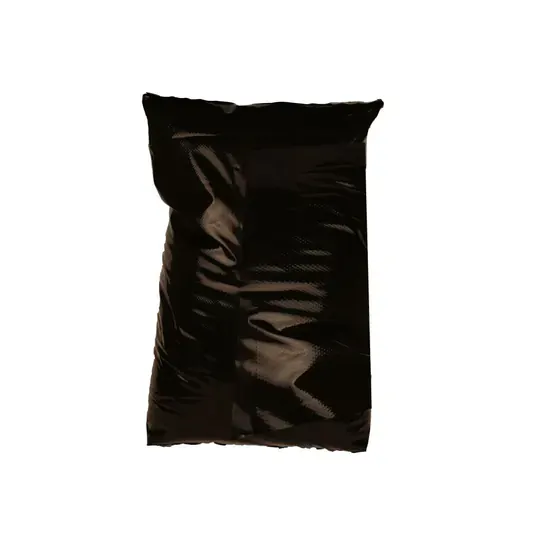
Bulk Granular & Catalytic Activated Carbon Media
Bulk granular coconut-shell & catalytic activated carbon media for backwashing FRP dechlorination tanks.
Loose 8×30 or 12×40 mesh granular activated carbon loaded inside FRP backwashing vessels to protect commercial RO membranes, water softeners, and whole-house plumbing from chlorine, chloramines, VOCs, tannins, and musty odors over long Empty Bed Contact Times (EBCT).
Common Size / Rating Options
1 lb Bag5 lb Tub
Application Scale & Replacement Verification
Scale: Filter MediaBrand: Engineering Family
Compare housing dimensions, port diameter, and membrane GPD capacity before ordering spares or requesting local dealer quotes. Verify System Fit in Water Planner →
Before You Install: Soak newly loaded dry bulk carbon in water inside the FRP tank for 12–24 hours BEFORE full startup so trapped micro-air escapes, then backwash upward to drain until black carbon dust clears completely.
Key Technical Specs
| Engineering Category | Filter Media · Activated Carbon Media |
|---|---|
| Field Variants Tracked | 216 dimensional & pressure configurations |
| Industry Standards | NSF/ANSI 61 · AWWA B604 · WQA Gold Seal |
| Carbon Type | Coconut Shell GAC, Acid-Washed Coconut GAC, Bituminous Coal GAC, Catalytic Carbon (Chloramine & H2S) (+2 more) |
| Mesh | 8x30 Mesh (Whole-House Tank), 12x40 Mesh (Standard Filter), 20x50 Mesh (Inline Cartridge) |
| Iodine | 1000 mg/g Standard, 1100+ mg/g High-Activity |
| Pack | 1 lb Bag, 5 lb Tub, 0.5 Cubic Foot Bag, 1 Cubic Foot Bag (27.5 lb) (+2 more) |
Right Fit When
- 8×44 to 36×72 FRP backwashing carbon vessels ahead of commercial RO trains and villas.
- Catalytic carbon grade specifically when city utilities use chloramines instead of free chlorine.
- Field aliases & trade names: Bulk Coconut Carbon, Catalytic GAC, Charcoal Filter Media, Koyla Media (PK).
- Engineered to NSF/ANSI 61, AWWA B604, WQA Gold Seal criteria where applicable.
When To Skip or Double-Check
- Skip standard regular coconut carbon if your city water report lists Chloramines—regular GAC exhausts rapidly on chloramines; load high-activity Catalytic Carbon and size larger EBCT!
Signs This Part Is Failing
- Chlorine/chloramine slipping into downstream softener resin
- RO membranes
- High pressure loss from fines
Diagnostic Checklists If Something Goes Wrong
Step 1 · Test effluent chlorine/chloramine breakthrough
Does DPD chlorine reagent show >0.05 ppm total/free chlorine leaving the FRP carbon tank?
Draw sample directly from the carbon tank outlet under full peak plant flow.
Common Questions
8×30 vs 12×40 mesh bulk carbon—which fits FRP backwashing tanks?
Use coarser 8×30 mesh inside large whole-house and commercial FRP tanks for lowest pressure drop and easy backwashing; reserve finer 12×40 mesh for high-contact cartridges or lower-flow polishing.
How often should bulk activated carbon beds be replaced?
Every 1–2 years on heavy commercial chlorinated feeds ahead of RO, or 3–5 years on municipal residential homes.